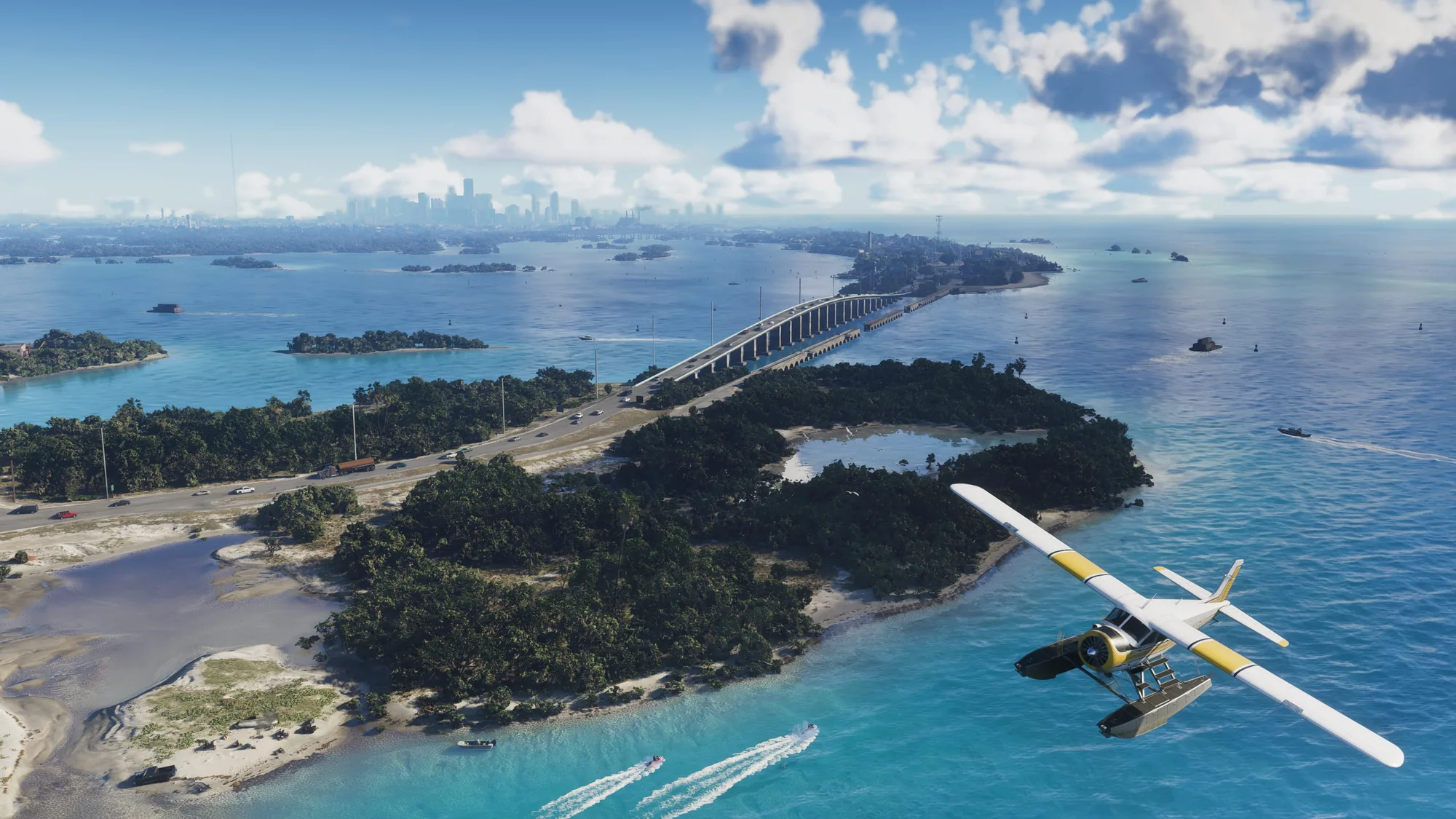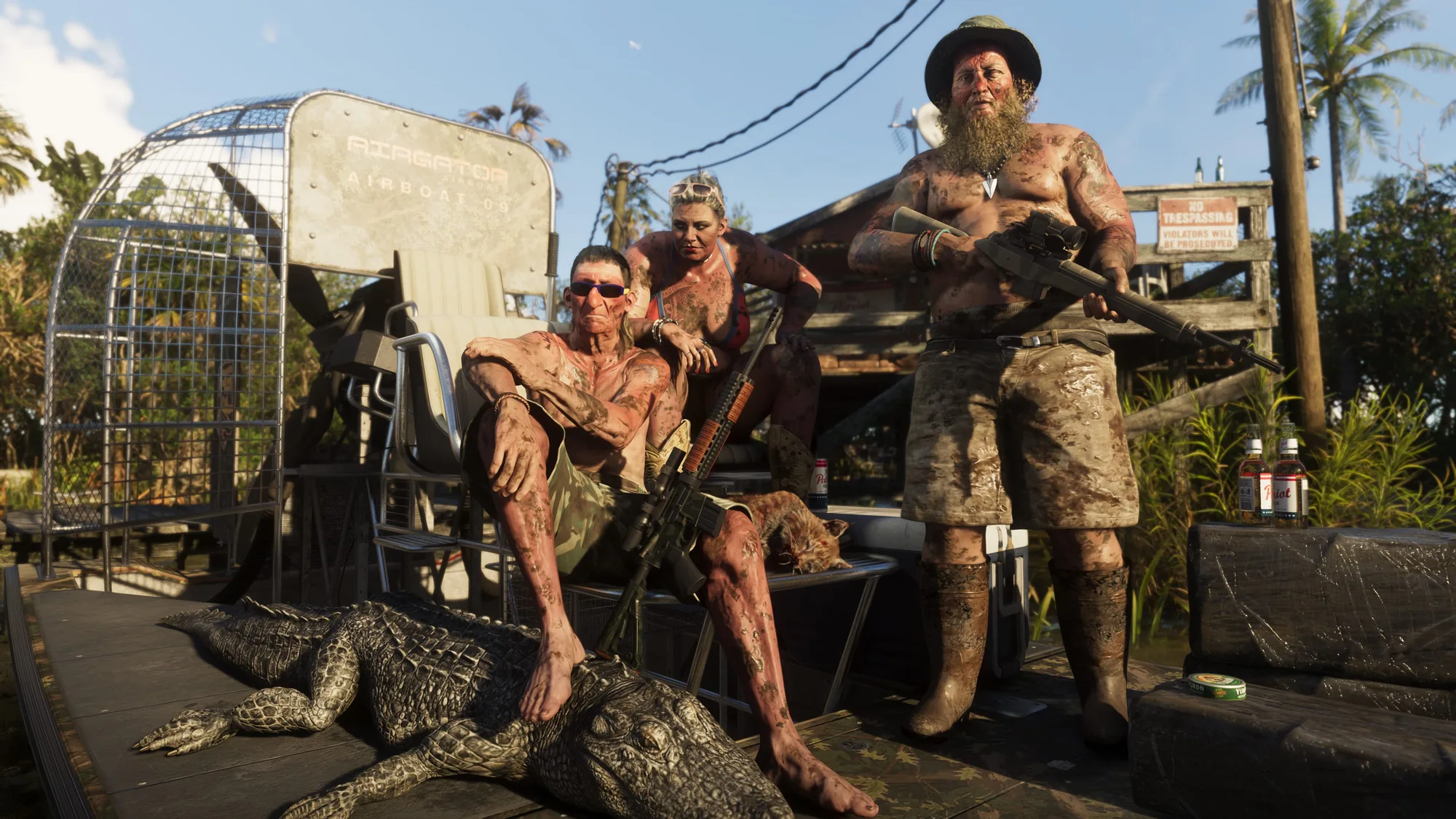
The October 5 LOVE Magazine interview describes a substantial writing operation behind GTA VI's street conversations, advertisements and radio. Rockstar's aim is for Leonida to keep sounding occupied when the player is not pursuing a mission or speaking to a named character.[1]
That background writing sits alongside, rather than beneath, the main narrative work. The studio's account explains how it wants ordinary movement through Vice City to expose players to fragments of other lives, jokes and opinions.[1][2]
A team focused on pedestrian dialogue
Reporting on writing director James Horton's comments identifies a Los Angeles team devoted to pedestrian dialogue, with advertising and comedy writers working across New York, Los Angeles and London. This is a specific production arrangement, not simply a promise of more NPC chatter.[3]
Horton describes conversations that can be caught in fragments while running through a crowded street. He also wants a person or activity to hold up when the player turns their attention towards it. The ambition is that ambient material works both as passing noise and as something worth stopping to hear.[2]
That gives background dialogue two jobs. It must sound plausible without demanding the player's attention every time, but it cannot depend on being ignored to conceal how thinly it is written. Whether the finished game achieves that balance remains a question for play, not an interview verdict.
Satire deliberately distorts the reference
Humphries says the studio wants an exaggerated version of contemporary life rather than a literal copy. Reporting in PC Gamer and VGC describes a process of taking an issue that interests the writers and amplifying its absurdity until the satire becomes legible.[2][4]
The distinction matters because research into Florida does not imply documentary accuracy. The people, speech and surroundings can provide a foundation while the jokes push behaviour well beyond an ordinary encounter. A convincing setting and grotesque comedy are compatible goals in the studio's explanation.[2][4]
Politics is present without a named target
VGC reports Humphries' reluctance to anchor the writing to specific politicians, movements or events. Politics still appears through election signs, campaign calls and radio discussion or advertising. Avoiding a direct reference to one politician is not the same thing as removing political life from Leonida.[4]
He also warns against building jokes around a trend that lasts only a few months. For a game made over years, that can date the material before it reaches players. The approach is intended to give the satire a longer useful life, not to guarantee that every joke will age well.[4]
The same attention extends to the leads
Gauvey-Kern describes Jason and Lucia as vulnerable, capable and fallible people who can learn from each other. D'Agostino discusses women she knows as influences on Lucia, aiming for a recognisable person with contradictions rather than a perfected template.[5][3][2]
Together, those comments connect the street writing to the main story. Rockstar wants both the people players follow and the people they pass to have enough particularity to withstand attention. It is a clear account of the writing method, while the quality of the result still belongs to the finished game.[1][2]
Sources and verification
5 sources, all from the press. Last accessed 6 October 2026. Each numbered marker in the story links to its entry here.
- [1]
- [2]
- [3]
- [4]
- [5]